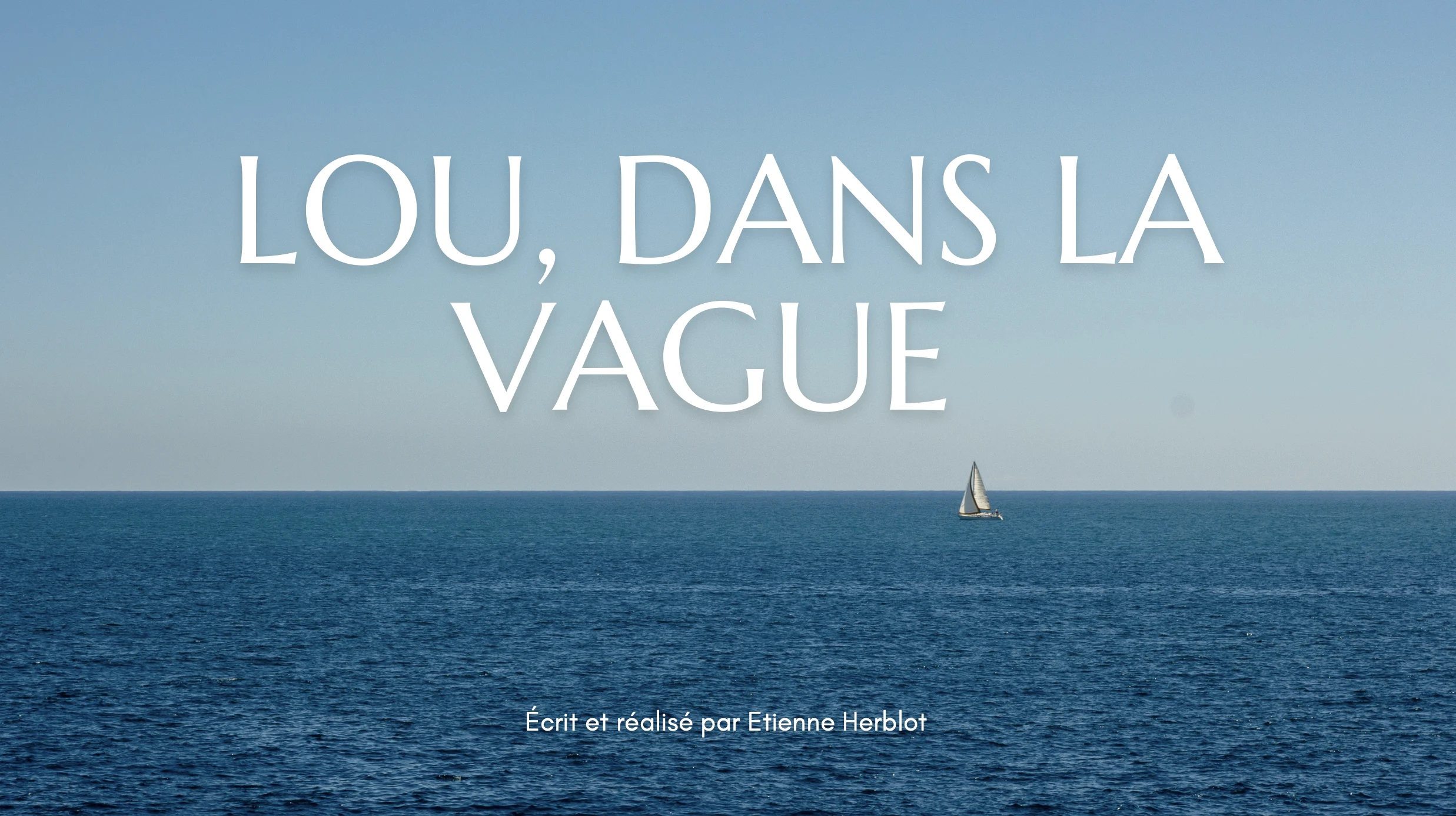
At Herblot Productions, we are producing our first documentary film : Lou, in the wave.
A movie about Lou Méchiche, young Bordelese visually impaired and triple world champion parasurfing.
To document each step of this project, we share everything in transparency on our chain YouTube.
And in this article, we give you the complete setup we chose for this shooting, explaining why each element is there, and what you can do without.
If you prefer to learn all this in video, the episode is just Here 👇
Cameras: two bodies for two uses
Choose your camera for one documentary, it is first and foremost to choose a how to be with his subject. Not a resolution or specification.
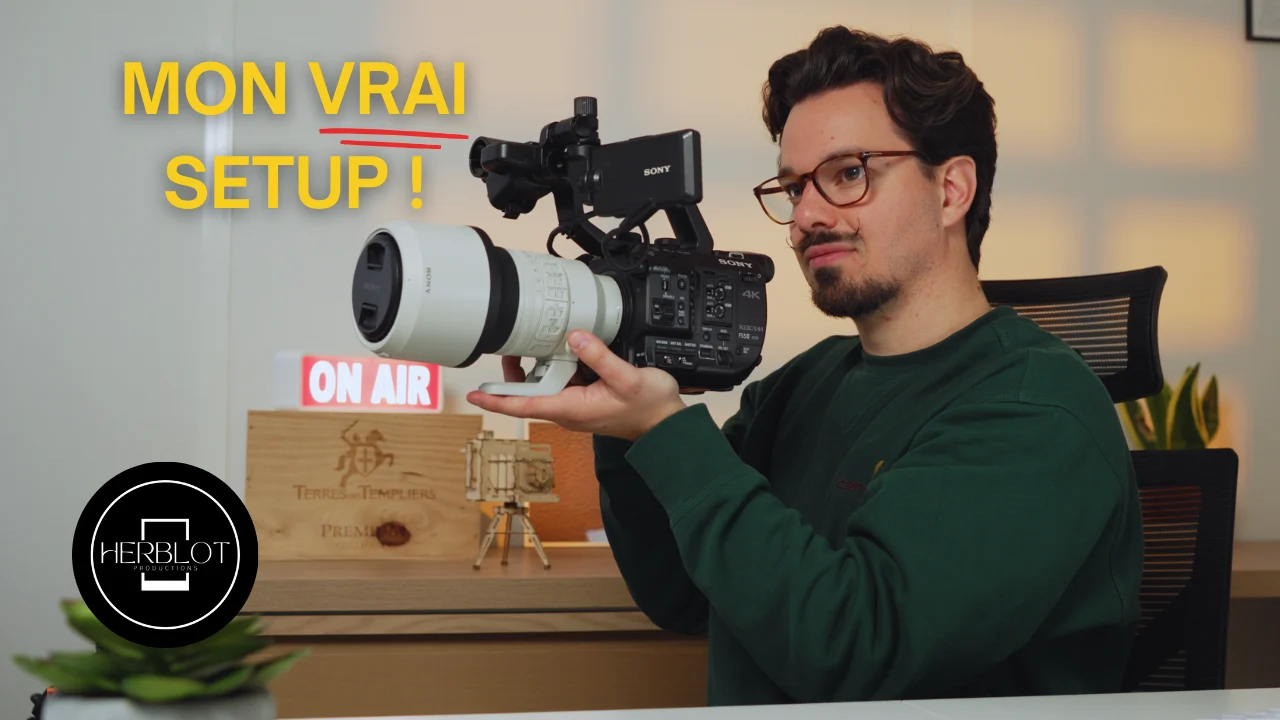
Sony FS5 Mark II — main camera
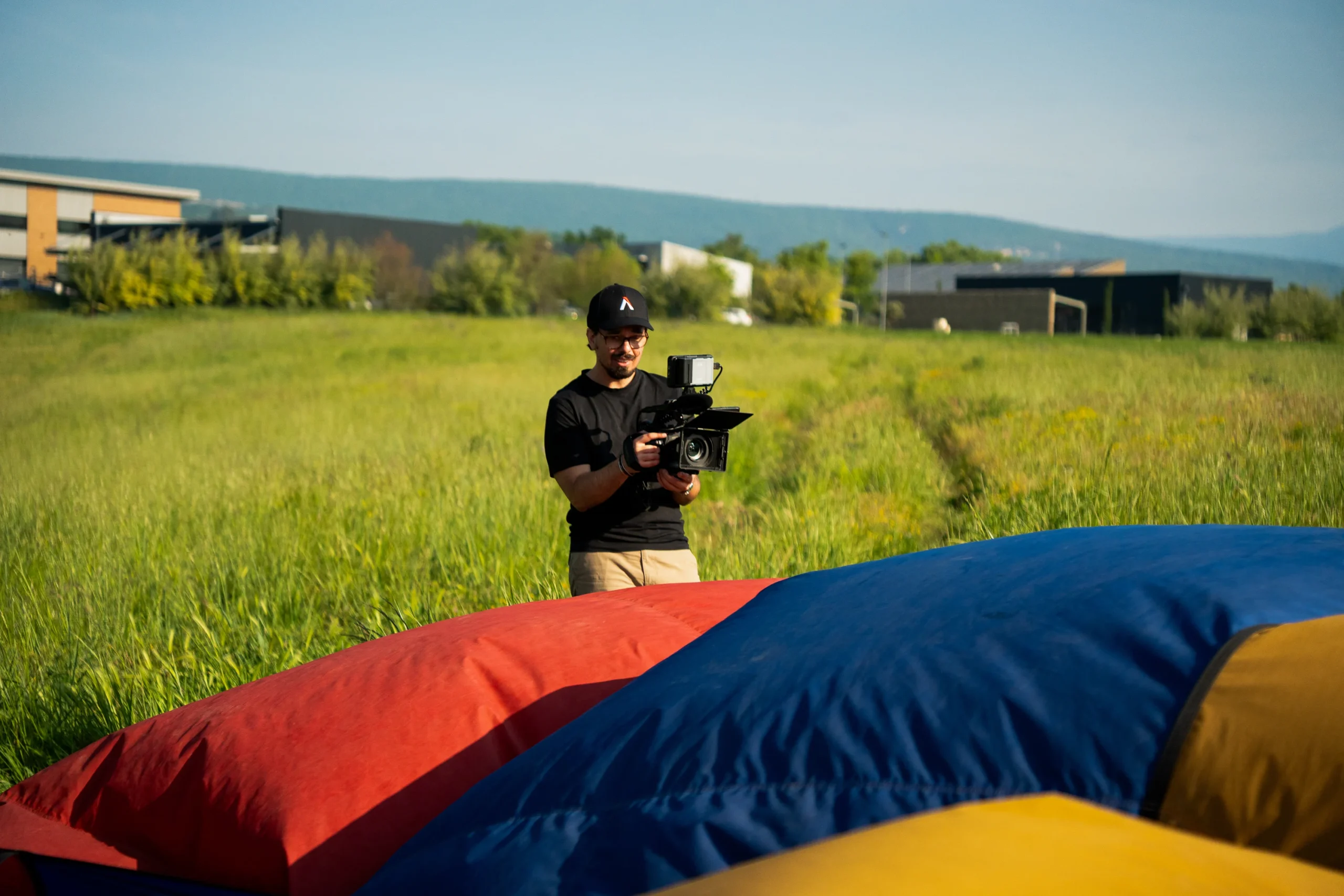
It's the spine of the shooting. The FS5 II is a compact broadcast camera, designed for reporting and documentary. What seduced us for « Lou, in the wave » : its discretion.
When you film someone in their daily life, on their board, as a family, you want a camera that forgets and not a device that reminds every moment that we are filming.
The FS5 II also offers excellent high light management, precious for filming outdoors with ocean reflection.
The Sony A7 IV — motion camera
The Sony A7 IV supports all dynamic planes : followed by Lou on his board, seafront movements, training sequences.
Mounted on the stabilizer DJI RS3 Mini, it becomes a motion camera fluid and precise. Its photo/video versatility also makes it an ideal tool for behind the scenes and informal moments between shots.
The objectives: three focal points, three ways to be close
In a documentary, the choice of Objective is not just a technical decision. It's a decision. narrative. Each focal point creates a different relationship between the camera and the subject.
16-28mm f/2.8 — space objective
For Large planes, landscapes, the vastness of the ocean. It's the goal that places Lou in his environment, very small in a big wave. It also serves indoors when space is forced. The f/2.8 aperture ensures good performance in low light.
24-70mm f/2.8 — Swiss knife
It's the lens that stays on the camera. 60% of time. Maybe more.
Interviews, cutting plans, daily life scenes, unforeseen situations... It covers everything. Its wide focal beach makes it the indispensable companion of a documentary shoot where one cannot anticipate every situation.
70-200mm f/2.8 — the objective of confidence
Most valuable for the documentary. The 70-200 captures an expression, a look, a smile. A distance, without being in the space of the subject, without him knowing that we are filming. These plans « Remotely stolen » are often the most authentic of a documentary. They're worth gold in assembly.
Stability: tripod, monopod and stabilizer
For interviews and fixed sequence plans. A good one tripod, it is the emotional stability of the film: when everything moves around, there are moments when the image must be laid, motionless, present. This is especially true in the sequences where Lou talks about his disability, his feelings, his life.
Between the tripod and the raised hand: the monopod. More stable than a shoulder plane, more mobile than a tripod. Ideal for training sequences, quick movements on the beach, moments when you have to move quickly while keeping a clean image.
The DJI RS3 Mini 3-axis stabilizer transforms the Sony A7 IV into a fluid motion camera. Light, compact, precise. It is cut for shooting in real conditions: sand, water, wind. It allows follow-up plans that give this feeling of being in the wave alongside Lou.
The external monitor Atomos Ninja V fulfils two essential roles: really see what we film in the sun on the beach (the camera screen sometimes becomes illegible outside), and record the signal in external RAW to maximize the quality in post-production.
On an outdoor documentary shoot, a monitor is not luxury, it's survival!
Sound: the part everyone neglects
Let's talk about it. most important and most often sloppy. A slightly blurred image, the brain forgives. A spitting or inaudible sound, the spectator picks up immediately and does not return.
Positioned on the main camera, the microphone called « top camera » captures the general atmosphere: the ocean, the waves, the wind, the sound environment of the stage. This atmosphere sound is indispensable for the immersion of the spectator and for sound editing in post-production. For this, we use several microphones, including the Sennheiser MKE 600.
For interviews and key moments, Lou will be equipped with a professional with its own dedicated material. On a shooting outside, with the wind, the sound of the waves, an athlete in motion, the sound does not improvise. He's getting ready, managing himself, watching himself in real time. Using a sound professional is one of the best investments of a documentary shoot.
Light: interior, night and mixed situations
Outside, natural light does the work. Especially on the oceanfront with the morning or evening shaving light. But as soon as you go inside or in a low light situation, you need artificial sources controlled.
Special plans: drone and GoPro
For aerial planes on the ocean, see Lou surfing seen from the sky, feel the vastness of the water beneath it. The drone will not be used permanently: on a documentary, overuse it harms immersion. But on some precise and prepared moments, it brings a visual breath to the film and a striking perspective of the relationship between Lou and the ocean.
Small, waterproof, unbreakable, the GoPro will be fixed on the board, perhaps on Lou herself, to give the point of view that no other camera can offer: that of the inside of the wave. This subjective plan is at the heart of the sensorial device of the film, which wants to make the spectator feel how Lou perceives surfing in spite of his misgivings.
Storage and feeding: the forgotten of the setup
Nobody talks about it in videos and setup articles. Yet that's where shooting is lost.
Sony SD Cards — High speed
On a camera like FS5 II, the speed of writing SD card is critical. Too slow a card causes dropped frames, corrupted files, data loss. Sony high speed cards guarantee a stable recording stream even in 4K.
Double backup on SSD
It is an absolute rule in audiovisual production: every night of shooting, all the rushes are copied to two separate SSDs, kept in two different places. Losing documentary rushes is irreparable. You can't do it again. Double backup is not an option, it is insurance.
SmallRig V-lock batteries
On a documentary shoot, there is no « pause recharge » programmed. Small Rigs V-lock offer long range and fast charging. There are many other brands but we mention the one we use. Provide the necessary double batteries and always have a battery charged on yourself. It sounds basic but it's mega important!
ND filters
Essential for filming outdoors at full opening without overexposing the image. In full sun on the beach, without ND filter, a f/2.8 opening is impossible to maintain. The ND filters to control exposure independently of opening and shutter speed. It's a tool indispensable in video.
What you don't need to make a beautiful documentary
This is the most important part of this article. All that setup you just read is our own tool for our own film. You don't no need From all this to start!
A first documentary can be filmed with a more basic And a good mic. The result will be different. Not necessarily less beautiful. Just different.
What makes a documentary affect people is not the resolution of the image. It's the trust between the director and his subject. This is the moment captured at the right moment.
Start with what you have. Learn filming. The equipment evolves with projects and needs, not the reverse.
You want to follow the manufacturing of « Lou, in the wave » step by step? Every Sunday, a new episode is published on our YouTube channel.
Do you want to support this documentary or invest in this project? CONTACT US !